
EP 36 · Top Picks
10 Gardens — The Slowest Art on Earth
Ten gardens, ten arguments about beauty — a quarry in flowers, a two-century family, a free harbour garden. Our picks, trade-offs stated, all safe.
A garden is the slowest art there is. A painting takes weeks, a building takes years — a garden takes a lifetime, and it is planted for people the planter will never meet. Jennie Butchart filled a quarry she would never see finished; the Maeda lords of Kanazawa built for two hundred years; a professor in Korea sold his house to keep planting. This list is ten gardens where the slowness is the point: one garden, one argument about beauty. The order is reading order, not a ranking, and every place here is one we consider genuinely safe to visit; anywhere war-torn, reckless, or accident-prone never makes our lists. One rule runs through the whole list: a garden is a place of season — the same garden in March and in October is two different gardens, so check what is in bloom before you check the weather. Go slowly, sit down, and let the garden do its work. Pick one, give it a morning, and run your dates through Decide before you book; it will tell you which garden fits your season and your pace.
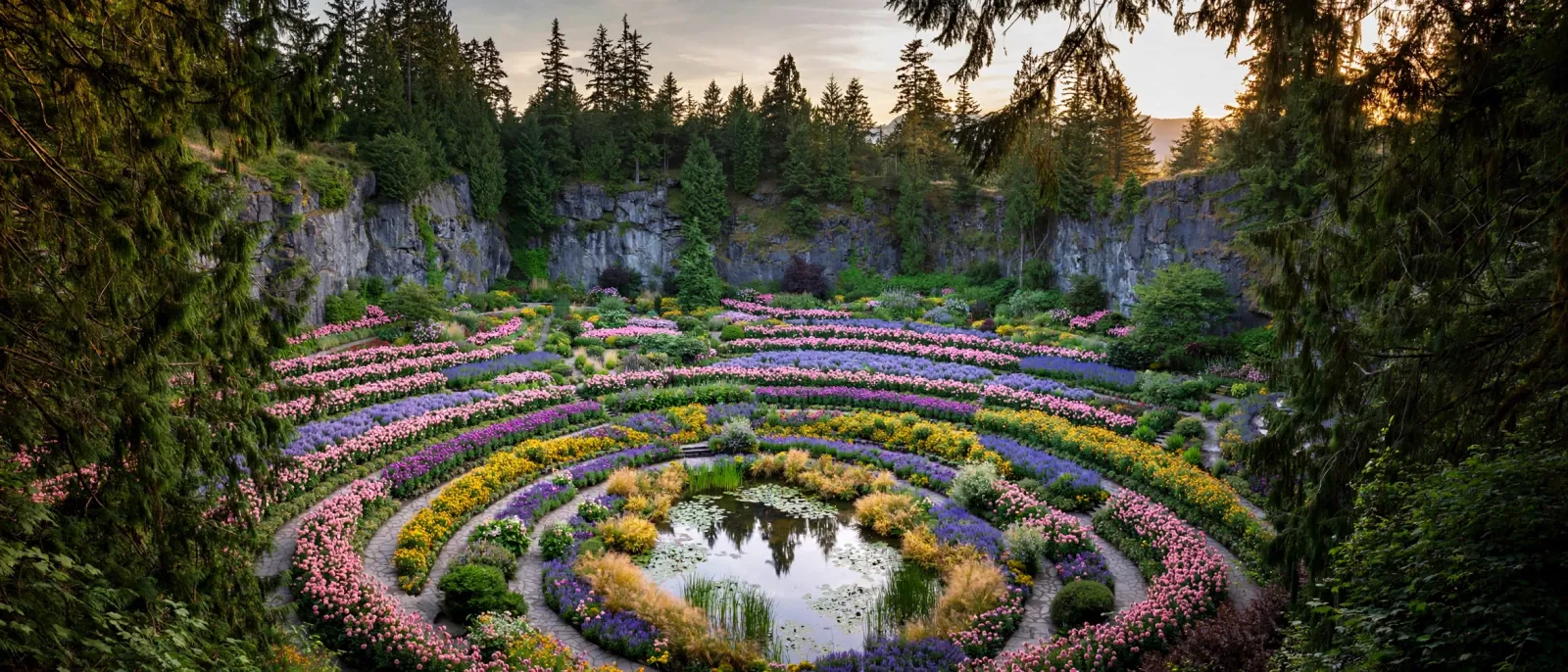
01 · Butchart Gardens, Canada — the quarry one
Fifty-five acres on the Saanich Peninsula, 21 kilometres north of Victoria — and the whole of it began in a hole. Jennie Butchart started planting in 1904, beside her husband's cement works, and when the limestone ran out in 1909 she did not fill the quarry in: she filled it with flowers. Tons of topsoil came in by horse and cart, ivy was tucked into the quarry walls by hand, and the Sunken Garden took nine years to finish — still the largest and most famous part of the gardens, with the Japanese Garden, the Italian Garden and the Rose Garden growing up around it. More than a million bedding plants, in some 900 varieties, keep it in bloom from March to October, and in 2004, on its hundredth birthday, it was named a National Historic Site of Canada. Our reason: the only garden on this list that started as a hole in the ground — an industrial wound turned into the most famous flower bowl in Canada. The trade-off: it is a show garden, and it shows — go in bloom season, March to October, and go early in the day, before the coaches arrive; winter is quiet and the beds are bare. Run your dates through Decide before you go.
02 · Singapore Botanic Gardens, Singapore — the free one
Eighty-two hectares at the edge of Orchard Road, founded in 1859 — and the only tropical botanic garden on UNESCO's World Heritage List, inscribed on 4 July 2015. It began as a garden of the Agri-Horticultural Society and grew into a scientific institution that helped bring the rubber tree to Southeast Asia; today it holds a patch of rainforest older than the city around it, and the National Orchid Garden on its hillside, with more than 1,000 orchid species and hybrids. The main gardens are free, open from 5 in the morning until midnight, every day of the year. Our reason: the only UNESCO garden on this list that costs nothing to walk into — world heritage, free, at the end of a shopping street. The trade-off: the equator sets the terms — go early, before the heat, and carry water; the Orchid Garden is the one enclosure that charges, and it closes at 7 in the evening. Run your dates through Decide before you go.
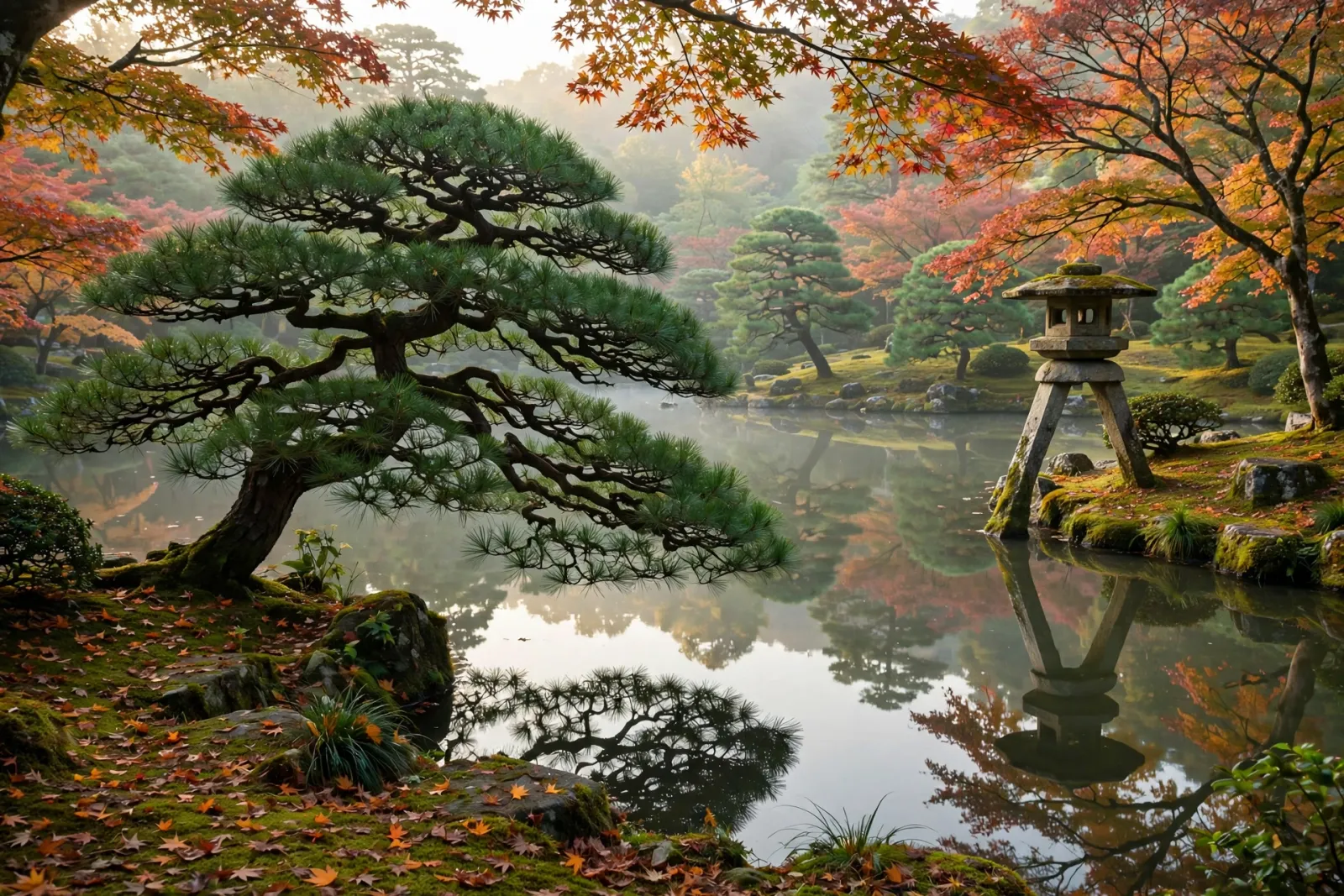
03 · Kenrokuen, Japan — the six-virtues one
Eleven point four hectares beside Kanazawa Castle, built by the Maeda lords of the Kaga Domain from the 1620s into the 1840s — and counted, with Kairakuen and Korakuen, as one of the Three Great Gardens of Japan. The name means the garden of six attributes: spaciousness and seclusion, artifice and antiquity, flowing water and broad views — six qualities classical theory said could not live together, held in one strolling garden of ponds, hills, teahouses and old pine. Its fountain, the oldest in Japan, runs on nothing but the natural pressure of the water, and in winter the pines wear yukitsuri, ropes that hold the branches against the snow. It was named a Special Place of Scenic Beauty in 1985. Our reason: the only garden on this list built as a philosophy — six impossible qualities in one walk. The trade-off: winter is its most famous face, and a summer visit shows a greener, quieter garden — check the season, and give it a slow morning, not an hour. Run your dates through Decide before you go.
04 · Longwood Gardens, USA — the rescue one
More than 1,000 acres in the Brandywine Valley at Kennett Square, Pennsylvania — and a garden that exists because one man bought a farm to stop the trees being cut. In July 1906 Pierre S. du Pont, 36 years old, bought the Peirce family's arboretum out from under the lumbermen, meaning only to save the trees; within a few years he was building the Flower Garden Walk, the Conservatory — four and a half acres of glass, twenty indoor gardens — and the Main Fountain Garden, and he opened it all to the public in 1921. Today there are twenty outdoor gardens, a 10,010-pipe organ, and a new West Conservatory that opened in November 2024. Our reason: the only garden on this list saved from the axe — a rescue that became America's great display garden. The trade-off: scale is the price — more than a thousand acres cannot be done in an hour, so pick a wing and walk it properly; and the fountains run on a schedule, so check show times before you go. Run your dates through Decide before you go.
05 · Royal Botanic Garden Sydney, Australia — the harbour one
Thirty hectares on Farm Cove, at the eastern edge of Sydney's centre — founded in 1816 by Governor Macquarie, the oldest botanic garden in Australia and the oldest scientific institution in the country. It sits beside the Opera House, on the harbour's edge, with Moreton Bay figs shading lawns that have been walked since 1816 and a palm grove planted in the garden's earliest years. It is free, open every day, and the harbour is part of the garden: the view across the water is the planting's second half. Our reason: the only garden on this list where the city is part of the view — a scientific garden that happens to sit on the most famous harbour in the world. The trade-off: it is a working garden, not a theme park — the pleasure is in walking slowly, and the harbour wind can be sharp, so bring a layer even on a warm day. Run your dates through Decide before you go.
06 · Christchurch Botanic Gardens, New Zealand — the river one
Twenty-one hectares inside a loop of the Avon River, in Hagley Park — founded in 1863, when an English oak was planted to mark the marriage of Prince Albert and Princess Alexandra of Denmark. The city calls itself the Garden City, and this is why: more than ten themed gardens, a rose garden, conservatories, and native and exotic collections, all free, all inside the river's bend. The oak is still there, more than 160 years on, and the garden has grown from a wetland into the city's green heart. Our reason: the only garden on this list that began with a single tree planted for a wedding — one oak, and a whole Garden City grew around it. The trade-off: Christchurch weather changes fast, so bring a layer; and the garden is at its best in spring, when the daffodils and cherry come out — winter is quieter, and the conservatories are the warm corner. Run your dates through Decide before you go.
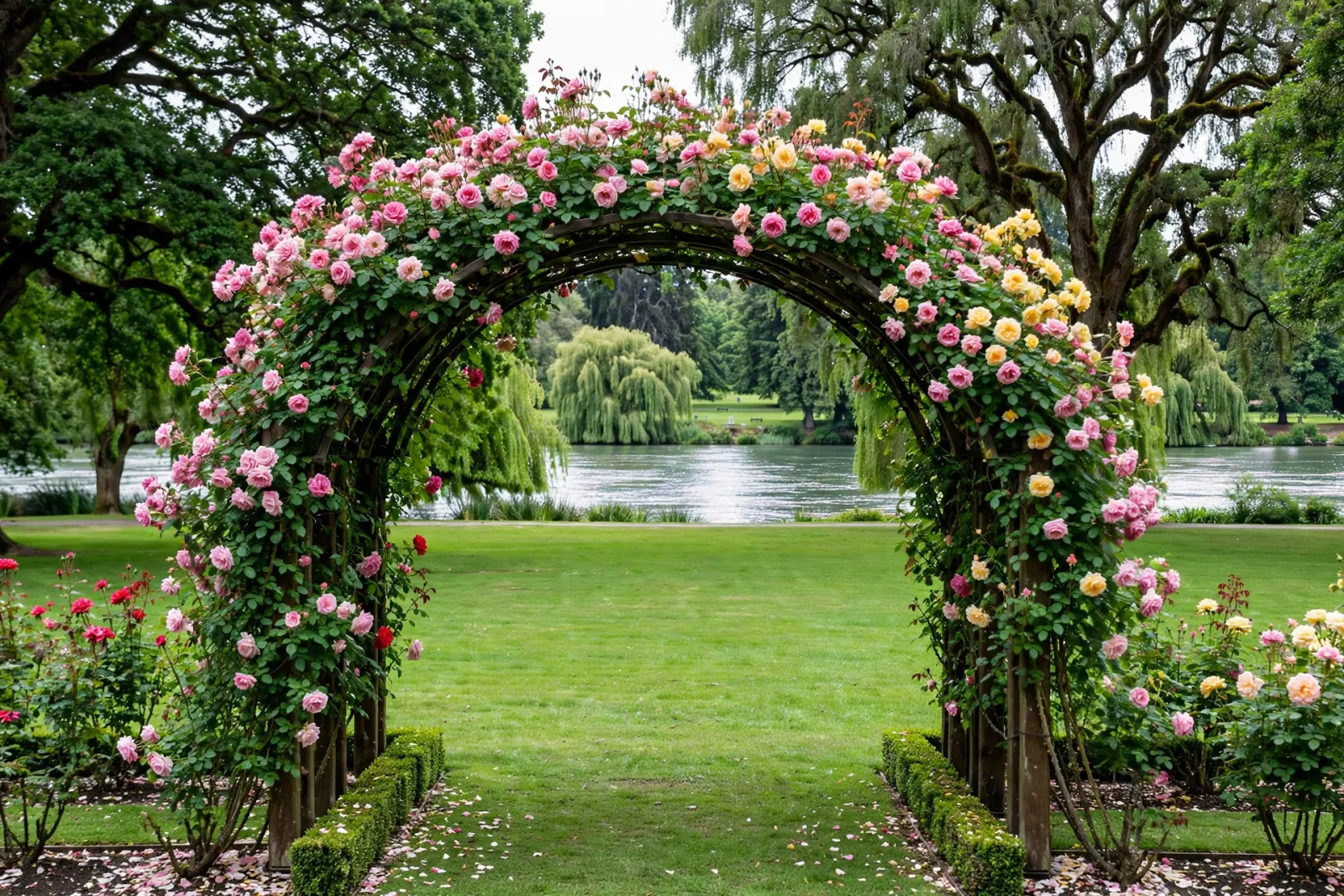
07 · Powerscourt Gardens, Ireland — the view one
Forty-seven acres at Enniskerry, County Wicklow, 24 kilometres south of Dublin — and a garden built around a mountain framed like a picture. The Italian Garden drops in seven terraces from the Palladian house, laid out in the 1840s by Daniel Robertson, down to Triton Lake, with the Great Sugar Loaf — a 501-metre cone — standing exactly behind it. Beyond lie the Japanese Garden, laid out in 1908, the walled garden, and the Pepperpot Tower, and National Geographic ranked these gardens third in the world. Our reason: the only garden on this list where the mountain is part of the design — the Sugar Loaf is not a backdrop, it is the garden's second half. The trade-off: the famous waterfall is not in the garden — it is six kilometres away, a separate visit with its own ticket — and the grounds are hilly, with steps in the Japanese Garden, so wear proper shoes. Run your dates through Decide before you go.
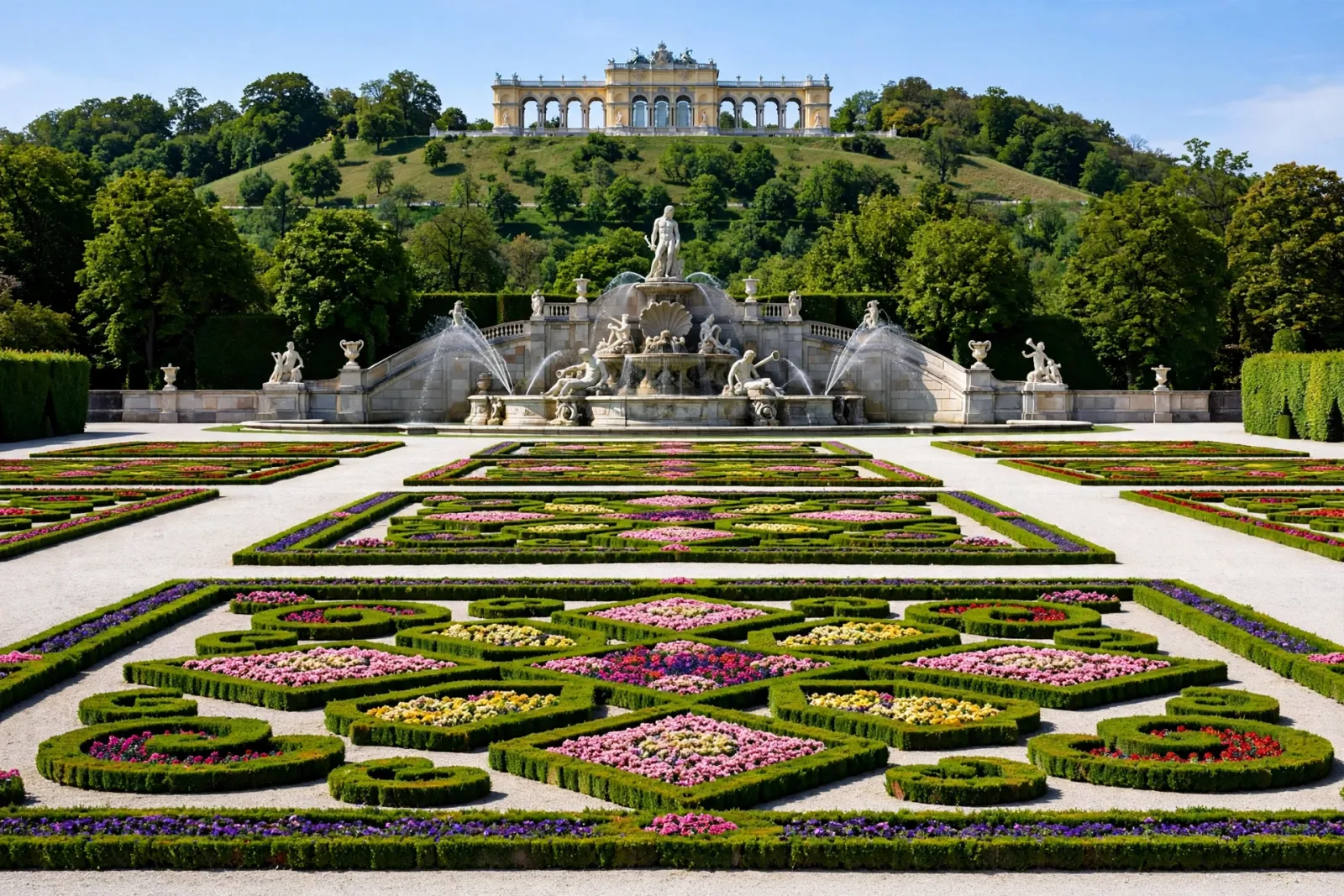
08 · Schönbrunn Palace Gardens, Austria — the free imperial one
A 160-hectare Baroque park behind the palace in Vienna — inscribed with the palace as a UNESCO World Heritage Site in 1996, and free to walk, dawn to dusk, every day of the year. The Great Parterre, laid out in 1817, runs from the palace terrace to the Neptune Fountain of 1781, and above it the Gloriette, finished in 1775, holds the best free panorama in Vienna. The park was opened to the public around 1779, and the Tiergarten beside it, founded in 1752, is the oldest zoo in the world — but this entry is about the garden, not the palace rooms: the hedges, the fountains, the long gravel alleys, and the way the whole place belongs to the Viennese as much as to visitors. Our reason: the only garden on this list that is both a UNESCO site and free — an emperor's garden, open to everyone, every day. The trade-off: the palace draws the crowds — the far corners, the Roman Ruin and the Obelisk, are the quiet ones; and the Gloriette climb is a real uphill walk, so take the side path and give it time. Run your dates through Decide before you go.
09 · Garden of Morning Calm, South Korea — the private one
Three hundred and thirty thousand square metres in a stony valley at Gapyeong, an hour from Seoul — and the only garden on this list that is one person's life work. Professor Han Sang-kyung, a horticulturist at Sahmyook University, came home from a visiting post in the United States convinced Korea needed a garden of its own kind; he bought the valley in 1994, sold his house to keep building, and opened the garden on 11 May 1996 with ten themed gardens. Today there are twenty-two, with some 5,000 plant species, laid out with the curves, empty space and balance of traditional Korean design, and it is Korea's oldest private botanical garden. In winter the whole place lights up for the light festival; in summer it is flowers and pine shade. Our reason: the only garden on this list built by one person's hands — a professor's answer to the question of what a Korean garden should be. The trade-off: it is a day trip, not a stroll — the hills are an hour from Seoul, so plan the bus and the day; and winter lights and summer flowers are two different visits, so pick your season. Run your dates through Decide before you go.
10 · Madeira Botanical Garden, Portugal — the island one
Eight hectares on a hillside above Funchal, opened in 1960 on the old Bom Sucesso Estate — and the only garden on this list where the island's climate does the work. Six sections hold the world's plants in one place: Madeiran endemics, an arboretum, succulents, agro-industrial plants, medicinal and aromatic plants, and palms and cycads, with a bird park and a small natural history museum beside them, and a cable car up from the town. Do not confuse it with Funchal's other two famous gardens: Palheiro Gardens, the Blandy family's 19th-century English-style quinta on its own hillside, and the Monte Palace Tropical Garden, 70,000 square metres of koi ponds, tiles and museums up in Monte — three gardens, three different places, three different visits. Our reason: the only garden on this list where the Atlantic does the watering — an island garden that collects the world because the world grows here. The trade-off: it sits on a steep hillside, so the paths climb; take the cable car up and walk down, and give the endemic section the slow look it deserves. Run your dates through Decide before you go.
Hidden gem
A garden is the slowest art — you plant for people you will never meet.
Lesson
Pick a garden by its season, not by its name — the same garden in March and in October is two different gardens.
Would return
Go back to the same garden in a different season — the flowers turn, the light changes, and the garden you thought you knew shows you another one.
Reader stories
Have a trip worth telling?
We don't publish reader stories yet. If you'd like to share yours, tell us where you went — we're gauging interest before building this. No photo upload.
Tell us about your tripAll episodes
- EP 0110 Places You Must See in a Lifetime — Our PicksOur first Top Pick: ten places that earn a once-in-a-lifetime trip, chosen by us, trade-offs stated, all safe to actually visit.
- EP 0210 Cities to Visit in Spring — Our PicksOur spring pick: ten cities at their best when the world wakes up — chosen by us, timing stated, all safe to actually visit.
- EP 0310 Cities Where Summer Is the Point — Our PicksOur summer pick: ten cities where summer is the reason to go, not the obstacle — chosen by us, trade-offs stated, all safe to actually visit.
- EP 0410 Cities Where Autumn Is the Best Season — Our PicksOur autumn pick: ten cities at their best when the leaves turn — chosen by us, trade-offs stated, all safe to actually visit.
- EP 0510 Cities Where Winter Is the Best Season — Our PicksOur winter pick: ten cities that turn the cold into their best trick — Christmas markets, snow on temple roofs, lights against the dark. Chosen by us, trade-offs stated, all safe to actually visit.
- EP 0610 Islands, 10 Answers to Life — Our PicksTen islands, ten answers to life — the honeymoon island, the adventure island, the do-nothing island. Our picks, trade-offs stated, all genuinely safe to visit.
- EP 0710 Food Cities, 10 Dishes That Explain Them — Our PicksTen food cities, ten dishes — one dish per city that explains the whole place. Our picks, trade-offs stated, all genuinely safe to eat your way through.
- EP 0810 Christmas Markets, 10 Cups That Warm You — Our PicksTen Christmas markets, ten warm cups — one per market that tells you what the night tastes like. Our picks, trade-offs stated, all safe to wander in December.
- EP 0910 Legendary Hotels — One Legend Each, Our PicksTen hotels famous for a single story each — a drink, a bar, a pool in the sky. Our picks, trade-offs stated, all in cities we consider genuinely safe.
- EP 1010 Maple Places — One Shade of Red Each, Our PicksTen places to watch autumn turn red — one shade per place, from temple crimson to lakeside ember. Our picks, trade-offs stated, all safe in November.
- EP 1110 New Year's Eve Cities — One Midnight Each, Our PicksTen cities, ten midnights — fireworks over a harbour, bells in a temple, a street party in the old town. Our picks for December 31, trade-offs stated, all safe.
- EP 1210 Ski Resorts — One Mountain, One SnowTen mountains, ten snows — powder that floats, pistes polished to glass, one peak pink at dawn. Our picks for winter, trade-offs stated, all safe.
- EP 1310 Walkable Cities — One Step at a TimeTen cities best seen on foot — cobbles, canals, lanes and arcades. Our picks for walking, trade-offs stated, all safe.
- EP 1410 Scenic Train Journeys — One Window at a TimeTen rail journeys where the window is the destination — glaciers, fjords, deserts and castles. Our picks, trade-offs stated, all safe.
- EP 1510 Legendary Castles — One Story EachTen castles where the story is the reason to go — a mad king's dream, a vampire's shadow, a white heron on a hill. Our picks, trade-offs stated, all safe.
- EP 1610 Best Sunsets — One Afterglow EachTen sunsets worth planning a day around — from Oia's white walls to Uluru's red rock. Our picks, trade-offs stated, all safe.
- EP 1710 Hot Springs — One Warmth EachTen hot springs worth slowing down for — from Beppu's steaming hells to the Blue Lagoon's milky blue. Our picks, trade-offs stated, all safe.
- EP 1810 Museums — One Treasure EachTen museums worth a whole day each — from the Mona Lisa's small smile to the Rosetta Stone's three scripts. Our picks, trade-offs stated, all safe.
- EP 1910 Seaside Towns — One Sea EachTen seaside towns worth slowing down for — from Positano's pastel cliffs to Bora Bora's lagoon. Our picks, trade-offs stated, all safe.
- EP 2010 Northern Lights — One Light EachTen aurora places to stand in the cold for — from Tromsø's fjord light to Ilulissat's iceberg light. Our picks, trade-offs stated, all safe, none guaranteed.
- EP 2110 Snow Towns — One Snow EachTen small towns to spend winter in — from Shirakawa-go's snow roofs to Hallstatt's frozen lake. Our picks, all safe, none of them a ski resort.
- EP 2210 Warm Winters — One Winter EachTen warm places to spend the winter, grouped by our own budget tiers — easy, mid, splurge. Our picks, no live prices, no invented numbers, all safe.
- EP 2310 Winter Festivals — One Festival EachTen winter festivals worth travelling for — snow sculptures, ice palaces, light on frozen canals. Our picks, trade-offs stated, all safe.
- EP 2410 Winter Warming Dishes — One Dish, One WarmthTen winter dishes worth travelling for — hotpot, ramen, fondue, stews and soups that warm you from the inside. Our picks, trade-offs stated, all safe.
- EP 2510 Legendary Hotels — A Night Inside HistoryTen hotels that are destinations in themselves — palaces, a castle, and grand dames where one night inside is the trip. Our picks, trade-offs stated, all safe.
- EP 2610 Christmas Markets — A Walk With a Warm MugTen Christmas markets worth walking slowly — a warm mug in hand, a paper star above, nuts still warm in your pocket. Our picks, trade-offs stated, all safe.
- EP 2710 Night Markets — Every City After DarkTen night markets where the day ends and the city starts again — lanterns, smoke, neon, satay, noodles. Our picks, trade-offs stated, all safe.
- EP 2810 National Parks — The Earth, UneditedTen national parks where nature is the main character — geysers, granite, canyons, fjords, and ice. Our picks, trade-offs stated, all safe to actually walk.
- EP 2910 Lakes — Water That StaysTen lakes where water stops and lets you look — turquoise mirrors, deep blue calderas, island churches, villa shores. Our picks, trade-offs stated, all safe.
- EP 3010 Waterfalls — Water That FallsTen waterfalls where water stops and starts falling — the widest curtain, 275 falls at once, a path behind the water. Our picks, trade-offs stated, all safe.
- EP 3110 Caves — The Light Inside the DarkTen caves where the dark is the point and the light is the surprise — glowworms, a train, ice, a sunbeam, a skylight. Our picks, trade-offs stated, all safe.
- EP 3210 Glaciers — Where Time FrozeTen glaciers, ten personalities — a calving wall, a rainforest tongue, a newborn lake, a river of ice, stripes of ash. Our picks, trade-offs stated, all safe.
- EP 3310 Canyons — Where the Earth Split OpenTen canyons, ten personalities — North America's deepest gorge, a marble gorge healing, a canyon that is no canyon. Our picks, trade-offs stated, all safe.
- EP 3410 Cruise Routes — Ten Places, One SailingTen routes, ten personalities — a fjord for small ships only, four Hawaiian islands in seven nights, the Arctic at the top of the world. Our picks, all safe.
- EP 3510 Stargazing Spots — Where the Night Is Still DarkTen dark skies, ten characters — a sacred summit, a gold-tier valley, a reservoir under the Milky Way. Our picks, trade-offs stated, all safe.
- EP 3610 Gardens — The Slowest Art on EarthTen gardens, ten arguments about beauty — a quarry in flowers, a two-century family, a free harbour garden. Our picks, trade-offs stated, all safe.
- EP 3710 Beaches — Where the Land Gives UpTen beaches, ten ways the land ends — famous, quiet, white, black, and two with rules that say no. Our picks, trade-offs stated, all safe.